
Netflix has to provide closed captioning on its online video, according to a court ruling in a lawsuit brought by the National Association for the Deaf. This is interesting for its online ramifications, and also because Ars Technica has an article about it where a law professor redefines the term “going ballistic.”
If websites must comply with the ADA, all hell will break loose. Could YouTube be obligated to close-caption videos on the site? (This case seems to leave that door open.) Could every website using Flash have to redesign their sites for browsers that read the screen? I’m not creative enough to think of all the implications, but I can assure you that ADA plaintiffs’ lawyers will have a long checklist of items worth suing over.
A few points I’d like to make: First of all, YouTube has been working on closed captioning for years and in fact their captioning technology is surprisingly advanced. Secondly, in most cases these captioning files already exist for movies and TV shows. Unless Netflix is using some bizarre standard nobody has heard of, which it doesn’t, it mostly just has to ask the owner of the data to fork the files over. Thirdly, would forcing retail websites to ditch that annoying Flash scroll that takes up half the page really be so bad?
He does have a point in that this breaks with judicial precedent that websites do not have to comply with the ADA, and it’s likely Netflix will just appeal this. But dude, come on. It’s the deaf. They have a hard enough time of it as it is. Cut them some slack.
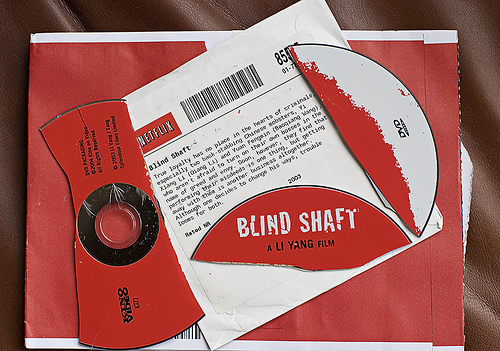
(Image courtesy swanksalot on Flickr)


Isn’t is just much more fun to make up your own dialogue anyway?
First, Netflix did NOT lose the case, yet! Judge Ponsor denied defendant Netflix’s Motion for Judgment on the Pleadings SEEKING DISMISSAL of the case. The case, Case No. 3:11-cv-30168, can now MOVE FORWARD.
Second, this is the first legal decision in a court. There have been NUMEROUS out-of-court settlements with numerous companies agreeing with the Department of Justice and others (e.g. National Federation of the Blind vs. Target) to make their web sites accessible.
Third, the Department of Justice has always maintained that the American’s with Disabilities Act DOES pertain to web sites! For example, here’s a recent out-of-court agreement with Wells Fargo that includes web site accessibility: [ [www.ada.gov] ]. Many “accessibility” cases prosecuted by the DOJ that begin with nothing to do with web site accessibility, end-up with web site accessibility added to the agreements.
Fourth, FLASH *can be* fully accessible! It’s up to the programmers to adopt the not-too-difficult methods. Problem is: we can’t get developers to add simple things like proper ALT tags on image links (e.g. State of Ohio developers put alt=”today” on image link instead of alt=”legislative schedule” [ [www.legislature.state.oh.us] ] because developers know ALL blind people understand that “today” actually means “legislative schedule!”). Here’s just one of Adobe’s FLASH accessibility page: [www.adobe.com] – again, good luck getting developers to read it, let alone DOING it!
FYI: WEBAIM has a good, SMALL summary of cases and settlements: [webaim.org]
unfortunately, not all will be enforced to have closed caption. Only major companies with any movie, show, etc to release or run will be enforced, but any user who will post some personal video can’t be enforced unless he/she can add captioning for themselves.
I have been avoiding to become the member of Netflix because I won’t deal with the hassle like this crap.