
It’s a jolting figure: the US music industry is making less than half of what it made at its 1999 peak of $14.4 billion. It currently makes about $6.3 billion. Why did it drop so fast? Piracy, right?

Wrong. First of all, a fun little fact: that $6.3 billion figure is only album sales. Not ringtones, not licensing rights, not merchandise sales, none of that is included. Why don’t they include that? Because then you’d know they’re still making between $9 and $10 billion.
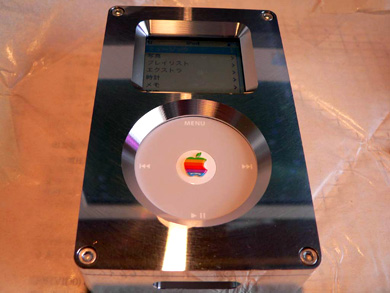
This kind of finagling of the facts is nothing more than par for the course for the last ten years. What’s brought the music industry down was not pirates, although Napster helped in a way. It was nothing more or less than the culmination of some painful economic karma that was richly deserved, and one company, Apple, seeing a weakness in an entire industry and striking like a cobra.
Don’t get us wrong, piracy is a problem in the sense that yeah, if somebody downloads a track instead of paying for it, the record companies are losing money. But as you’ll see, piracy is an amorphous problem in that it’s easier to pin the blame on than to accept that just maybe, they had all of this coming, and it reveals the current litigation for what it is: a very public and brutal hissy fit.
But first we need to understand why piracy is amorphous, and how that $14.4 billion figure came into existence.
Piracy: Impossible to Track, So Let’s Make Some Stuff Up
If you want to know how ridiculous, heck, stupid, the music industry is when it comes to piracy, look no further than the fact they literally demanded more money than exists on the planet Earth in damages in a recent case against LimeWire. But more interesting were the precedents the judge used in the case.

Accurate data on piracy is pretty much impossible to find — we’ve got no idea who downloads what, unless a tracking file is specifically introduced. But one case used as a precedent, Arista Records vs. Usenet.com, found 878 downloads. The Limewire case was over 11,000 “infringing” works, but the exact number of downloads isn’t really public knowledge.
What is possible to find is proof that the RIAA statements about actual monies lost and downloads are worthless. To say there’s been a lot of spin is understating the case; for example, in 2003, when the music industry was still making over $10 billion on album sales, they tried to pass off shipping fewer units as a loss. It’s widely accepted that the RIAA and the MPAA cannot be trusted for anything resembling accurate statistics on piracy or losses — not that this prevents them from making things up.
However, all of this turns on one crucial assumption: a song pirated is a sale lost.
Therein lies the problem. This isn’t to say people don’t pirate music — of course they do. But it’s not safe to assume that they would otherwise buy the song, especially since there are other, much stronger economic factors. Which brings us back to the era of AOL and Y2K panic.
Buying Music Like It’s 1999
To understand why the music industry choked so badly in the 2000s, all you really have to do is look at the ’90s. First of all, the music industry’s growth was unsustainable no matter how you slice it. Even if Shawn Fanning had decided to do something else with his life, if the iPod had never been invented, and digital music remained science fiction, the record industry still would have seen a precipitous drop. The ’90s music boom wasn’t because of some magic moment, it was for a fairly basic reason: people were replacing their tapes and records with CDs.
Secondly, the music industry had a death grip on the process, and everybody knew a lot of it involved breaking the law. For example, part of those profits, it later turned out, were due to a price-fixing scheme. But it goes deeper than that: the major labels had a level of control over radio, a key marketing tool, that had endured for years, and had similar control over MTV.
And albums were profit machines. A single sold from a buck to $3. An album sold, at minimum, for $15 in 1999. The record industry actually has royalty structures in place that pay more if you deliver above a certain number of songs on an album. It was in their best interest to keep hit songs off of singles and push albums instead. And, of course, once a song dropped off the singles charts, it could be locked in “Best Of” albums for eternity.
So, this is how it worked, in 1999: everybody was replacing their music collections with CDs being purchased at prices kept artificially inflated, and buying new music they were only exposed to by a tightly controlled marketing apparatus.
Enter the MP3.


Great piece; well done.
Agreed. Awesome article.
I blame Tyler The Creator and his edgy antics.
No, seriously I blame terrestrial radio. Seriously.
The problem with your theory is that ringtones (which used to be called cassingles, then CD singles), merchandising, licensing and concert revenues have always existed. They’re not making up any of the losses that have resulted from piracy. So we’ve got an industry that’s lost more than half its revenue in a decade, with no signs of that trend changing anytime soon. The industry has already been destroyed, we’re just waiting for the tipping point now where labels and distributors start closing up shop.
@Jason
…except the entire point of the article is that it’s far more likely that it was a shift from consumers accepting buying overpriced albums to purchasing single songs that has dinged the music industry’s revenue, not piracy.
Helps to read the article, kiddo.
Sorry to be unclear, but that was my point. Piracy destroyed the album by making record labels compete with Napster and the like, and that’s now leading to the destruction of the industry. Replacing album sales with individual track sales has been devestating, to the tune of 8 billion dollars over the last 10 years. Whether people buy or steal those individual tracks now the damage to the industry has been done. No point in sinking tens of thousands of dollars into a project if the return is going to be 1 million one dollar iTunes tracks rather than 1 million $15 albums.
So, Jason, is that supposed to illicit sympathy for the plight of the record labels? They had a crappy business model heading into the late 90s – albums that were held up by a few tentpole tracks – that got hit hard when Napster and Co. arrived on the scene. Despite the short time they were there, they exposed a big ol’ chink in the armor of the industry, and people realized that people would rather buy their favorite songs as parts rather than albums filled with stuff they didn’t want.
This isn’t like it wouldn’t have happened eventually anyway; mix-tapes exist for a reason – to compile all the “good” songs from multiple artists without all the chaff in between.
It’s also not like the recording industry is the only one to go through such straits. As people became more technically savvy, the computer industry had the same thing happen, but went the other way – designing components to be more interchangeable and allowing for customization of systems and ordering of individual parts. The end result is that the industry is intact but incredibly open to end-user customization.
Mind you, this whole speak of “destruction of labels” isn’t as big of a deal as most would like you to think it is. Studios aren’t always a high-fallutin’ deal like they were in the day; an enterprising individual can set up a quality amateur studio for a relatively low cost due to the advance of technology. This has resulted in a boom in amateur music done well – and that has paid off in loads for the amateurs looking to make it bigtime. Instead of putting together an album on their own and having to bid against label albums for the consumer’s 15 bucks, they can roll in a song to song contest – and come out on top.
At its essence, the whole thing is a battle between the established industry and the up-and-coming small businesses of the country. If the small businesses can do it better and for cheaper, why the hell should we mourn the loss of a fancy little decal on the plastic case?
If you want one of the nation’s best copyright lawyers to tell this story to you, read William Patry’s Moral Panics and the Copyright Wars. You’ll be really surprised at how accurate Dan’s characterization “financially ruining random citizens and passing copyright laws that damage basic freedoms and computer security” is.
Regardless of how you feel about the business model of the recording industry a consumer has no right, legally or morally, to violate the license on the product they purchased, much less steal the product. If you don’t like the way a company markets or distributes their product, you don’t consume that product. Simple as that.
This isn’t some noble evolution of intellectual property law. People are just stealing because it’s easy and anonymous. And make no mistake, that’s exactly what’s happening here. Illegal downloads outnumber legal downloads by leaps and bounds. If this were simply a matter of destroying the album concept in the music business it would still be problematic, but there’s a lot more than that going on.
What if I didn’t like the layout of this blog so I copied every word, picture and link, then posted it all up on my own server? Would that be okay? I think Uproxx has a stupid business model, and I have the technology to easily and anonymously do it how I see fit. Is that justifiable?
@Jason
“Illegal downloads outnumber legal downloads by leaps and bounds.”
I really don’t buy this at all. Show me your evidence, and not some music industry “statistics”.
I’m just glad cassette tapes are over and done with. Those things sucked.
If only we could get primetime news to run this kind of story…
I never said that it was a “noble” thing, and yes it is still stealing. Also, I think your mystery claim of illegal downloads far outstripping is total bunk. Itunes alone pushed out around 5-6 billion song downloads between Feb. 2010 and today.
Also, if you copied Uproxx wholesale, you’d get hit with a lawsuit – just like Napster did. If your action resulted in the population going “hey, that Uproxx business plan IS totally crappy!” and then doing it better LEGALLY, I (and the majority of the consumers, most likely), wouldn’t bitch about how unfair it was to Uproxx that entrepreneurs figured out how to do it better. Which is exactly what the majority of the record labels are doing. That, and copious amounts of lawsuits.
Also, along the same lines, shouldn’t MTV and VH1 be flipping a shit due to record labels being able to bypass them and throw videos straight to YouTube? But they don’t, because they have sense.
This article is 100% nonsense with a number of outright lies. First, industry figures do not include only album sales – they include album aqnd single song sales, both hardcopy and digital.
Second merchandizing is not a part of the music business. It’s not MUSIC. And merch has been around as long as there have been rock bands and it was never included in industry figures before, so why should it be now? Only so piracy apologists can “finagle the figures”. Licensing has been around as long as movies – again, it’s never been included in industry sales figures. And the truth is that licensing is way down, especially in the advertising sector, which commonly hires studio musicians on a “work for hire” contract to make “soundalike” music rather than to license commercial content.
Concerning the allegation that the impact of piracy is impossible to measure – another outright lie. Check out these graphs and tables:
[www.gearslutz.com]
The allegation of a “price fixing scheme” is another outright lie. No such scheme existed. In reality the price of music, adjusted for inflation, has fallen steadily since the mid 1960s when an album sold for the equivalent of $35-$40 in 2011 money.
The claim that the sales boom of the ’90s was due to people replacing their collections with CDs is likewise nonsense. Physical media wear out. People have always replaced old media with new. Cassette tapes were particularly failure prone but vinyl would wear out and get scratched as well. Even CDs decay over time, although it takes a bit longer.
This entire article is nonsense.
John, and I mean this sincerely:
You say you have proof that piracy had a real effect: you don’t. NO ONE DOES. That’s the entire point of the article.
You have a different interpretation of the same charts I’ve referred to, and that’s fine. Similarly, you don’t agree that the case I reported as price-fixing is price-fixing, that’s fine.
What I don’t like is the term “lie”. You don’t like what I’m saying? Then reply intelligently, instead of throwing a hissy fit that somebody dares to disagree with your worldview.
But….he has graphs. And tables! You know things are legit when you have tables.
You guys are assholes; I get all my trustworthy information from the Gearslutz.com message board.
Gearslutz.com: We’re slutz for facts! So much, that we spell it with a z!
Also, I’m pretty sure that settling out of court for a goddamn price fixing scheme by the major labels for 60+ million dollars INVOLVES PRICE FIXING.
[news.cnet.com]
PS: Google says you’re a recording engineer. It’s kind of a shame that a lot of innocent people are direly affected by this whole shitshow, and I’m sure that you’re not directly responsible for any of the crap that goes down, but part of being objective is to knowledge when the side you’re on does shitty stuff.
It may not have destroyed the music industry, but it sure forcibly sodomized small labels and the artists thereon.
Shitty music now-a-days is a big reason too!! If you like guitars and or rock music, You have not looked forward to an album release in some time!! Rap songs are getting cornier by the day, and guitar solo’s are fading away. Lil’ Wayne samples a beat that someone else wrote and says a few lines about how high he is or how many “bitches” he’s been with and are going to be with and he sells enough records to fix the economic downslide! The music department is the first part of a school that gets cut when funding is cut, which in turn kids dont know how to play/write music, and there isn’t anyone new to write good music!
John Epp
Do you realize that the graphs at [www.gearslutz.com] actually SUPPORT the articles arguments better than yours. IF you look at the chart you have sales in the early 70′s at just under 1 billion units with a shallow growth line that takes a jump in the mid 70′s when cassette quality improves and then another in the early 80′s when the Walkman is launched. Then it resumes that same shallow growth curve until about 1986-7 when CDs hit the mainstream and sales basically double over the next 10 years till they hit their peak at 3.4 billion in 1996 and start to decline down about the same rate they went up. To me that definitely looks like a trend caused by a switch in format that has slowly played itself out. Current LP sales are still 50% higher than they were at the start of the graph, which is more or less the increase in population over the time frame (210 million in 73, about 311 million today.) . And that doesn’t take into account the huge growth in single sales which is the second part of the argument. If you add in single sales to the LPs total units sold peak at 3.87 billion in 97 and have only dropped to 3.15 billion now and are starting to trend back up. That also looks like an audience switching to a preferred new method of purchase. I’m not saying that piracy hasn’t had a cost to the record companies, just that those numbers don’t make the case for it.
Tyler Furrows, your ignorance astounds me. You blame shitty new songs and “lack of guitar solo’s” for the decline in album sales, which says two things about you off the bat: you didn’t read the article, and you are incredibly out of touch with music today. Clearly you favour good old fashioned rock and roll (which isnt a bad thing) but you forget that history repeats itself. Do you think our grandparents were happy when rock and roll started sweeping the globe. Instead of an upright bass and piano we had the big bad electric guitar and the synthesizer to boot. Frank Sinatra was no where to be seen, instead Jimmy Hendrix was on the guitar. This scared a lot of people, and a lot of people tried to stop this revolution. Ultimately, no matter what – the youngsters lifted rock music to the forefront in rebellion, and it became the staple of music today.
Rock, however, isn’t the leading runner anymore. Not to say that’s a bad thing, it’s like saying jazz isn’t at the forefront anymore – they are both amazing and have talented musicians, it’s just things are moving forward. Kids no longer have to JUST learn guitar today, now they can play every instrument on the computer with little to no training.
In closing, stop trying to stand in the way of musical evolution; do you really want to be the equivlent of people protesting against elvis pressley?
The high cost of CDs had people copying them to cassettes so it’s no wonder people turned to free downloading. If the record companies had charged reasonable prices, variable pricing, and separate prices singles as ITunes does now, they might not be in this situation. btw, if you’re a songwriter, write a ringtone, not a hit single. Mo’ money!
However you want to spin it, there’s just not nearly as much money in the music business today. There used to be a “middle class” of the music industry – artists, studios, labels, musicians that were able to make a decent middle class living creating music. This industry supported thousands & thousands of people. This is almost all gone now. There are still the mega-stars, and still the kids living in poverty making music or running labels for the fun of it, but the huge middle is gone. Most independent labels are gone, and major labels no longer put out anything that might not be a huge hit. Most independent studios are gone. There is just a tiny fraction of the number of independent artists that can scrape out a living, even those with tens of thousands of fans. People still love music, and constantly listen to it. There has not been a decrease in music consumption. But somehow the money is just not there anymore.
I have two things to contribute.
1) CDs were very expensive when first introduced. The line sold by the recording industry was that as manufacturing costs declined and more consumers bought CDs, CD prices would decline. In large part, until iTunes came along, there was no real decline in CD prices–yes, a $15 CD is cheaper in 2011 dollars than a $15 CD in 1999 dollars, but real price declines pacing inflation is not what consumers were told.
Today, what’s the cost to physically produce a CD? Not much. Maybe buck per copy for small batches (less than 1000 copies), and much less for big batches. Of course, studio time, engineering, marketing & promotion, and distribution all add into costs–but with the exception of distribution, all those other costs are fixed (don’t scale with size of release) or are contingent (i.e., marketing & promotion costs are dependent on how much you want to do, how hard you want to push your run). In other words, if you’re a small-time musician paying for your own studio time, engineering, promotion, and distro of a small batch–say, 1,000 or so copies–you might end up paying $10-$15 per CD you produce. If you’re an independent label, your costs are going to be less per-unit–because you’re producing more and so the fixed production costs of producing the music itself are diluted across more copies. Run 50,000 copies and you’re looking at costs of perhaps $3-5 per CD. If you’re a big label, sure you have more overhead that has to be covered by CD sales revenues, but you have an even bigger cost advantage, as you have contracts that make the per-unit costs for distribution and marketing a LOT cheaper.
For a while I worked for a large national electronics retailer, and in my position I had access to company costs for all the merchandise we sold–including music & movies. A CD that retailed for $10.99 typically cost the company–and these costs include what the retailer paid to get the product onto the shelf, less “incentives” from labels and distributors–around $8. Ultimately, then, the labels had $7 per copy that they used to pay all their marketing, promotion, artist, and overhead costs.
Given that (when CDs were introduced) the industry assured customers that after a few years of CD penetration and improved efficiencies in the physical production of CDs, the retail cost per unit would something like $8, the conclusion I make is that the recording industry had a lot of profit space, and got used to it.
And the new paradigm guts the industry–because they can’t fall back on the “oh, CDs cost so much to make and distribute” argument anymore, because the costs to produce & distribute MP3s is negligible. And consumers buying 1 song instead of 10+ means that all the fixed costs are concentrated on that 1 song instead of diluted across an entire album.
A friend of mine is a musician who self-publishes, self-promotes, and self-supports. He sells his CDs at performances for $12 for his newest, and $9 for his prior releases. He makes a $3-5 per copy on the new, just about breaks even on the old; he can press fresh copies of anything and have them handy in less than a week. I asked him once how he feels about P2P sharing, and he siad that he’d kill to be “pirated.” It’s a no-cost (to me) distribution system, he said, bigger and better than anything the big labels has. He doesn’t care about “lost revenue” for exactly the reason Dan pointed out–he can’t “lose” sales that he wouldn’t have had in the first place. And maybe–just maybe–someone who downloads one of his songs decides that s/he wants to buy his stuff.
He sees it like a library; you go and check out a book by some author you’ve never heard of, and take a chance because it costs you nothing. If you hate the book, the author never gets a penny from you–but they wouldn’t have anyway, because you aren’t going to throw your hard-earned money away on some author you’d never heard of. And if you like the book, maybe you go buy a copy, and others from the same author. So ultimately–particularly for small-name musicians–the new system is better.
Once upon a time I found a pirated copy of an album from a band I really like. I downloaded it, because the only copy I could find to buy was something like $40–because it was an old, out-of-print import. I felt guilty, but rationalized what I did by telling myself: a) That $40 wasn’t going into the artist’s pocket–it was going to shipping and a premium due to the album’s scarcity; b) I would buy the album someday, and that would “even the scales.” Google happened, and before too long I found that the artist had a web page and was still producing music on his own–despite being dropped by his label 10 years prior. I put a $20 in an envelope and sent it overseas to his contact address, along with a brief note explaining why, apologizing for sticking him with US currency, but hopefully he could buy himself a drink with what was left after exchanging for BPS. A few weeks later I got a great email back from the guy, thanking me and sharing how broken the big-label industry is.
I’m wandering in what I’m saying, but my main points are thus:
The record industry wants to safeguard its profits, but its profits hit unrealistic, nosebleed levels, partly based on a paradigm that exploits artists and consumers.
Artists don’t like the system, because they get a tiny cut of the pie.
Artists aren’t threatened by P2P as much as big labels are.
And two last things. I know there are more music CDs put out, with a wider variety, than movie DVDs, but it still amazes me that I can buy a new movie for less than a new CD–and I can buy an older movie for FAR less than anything but a used CD.
Finally, there was no recording industry 100 years ago. The bloated corporations and production models of the second half of the 20th century were an aberration in music–not “the way things ought to be.” The future–and the “natural state”–of the music industry might be one where artists are in control–paying their own costs to produce & distribute music, and reaping all the profits. This isn’t a bad thing, because the Internet allows artists to self-market & self-promote & reach a wide audience–without powerful corporations intervening.
Oh, one last bit: I loathe the notion that when I buy a CD I’m buying a “license” to its content. That implies that it’s not my physical good to keep, re-sell, lend, destroy, or to play on any device I want. If I’m only buying a license, then, I should be entitled to a replacement if/when the physical disc fails.
(Sorry for the rambling. My Adderall kicked in, and you just can’t stop the train once it’s rolling.)
I know I’m a month late on this, but I get irritated when people misrepresent the facts in the situation.
First off, the music industry – represented by John Eppstein – assumes that a song illegally downloaded = a lost sale. That’s the most insane thing I’ve ever heard. I’ve ILLEGALLY downloaded a ton of music (here’s my confession, sue me), but most of it is garbage that I’ve never listened. And you’re insane if you think I’m going to spend $10,000 acquiring music I don’t like and don’t/won’t play.
Second, everyone always looks at the music industry in a silo. Music has always been purchased with discretionary income. What’s changed in the past 10 years? How about Xbox, Playstation, and Nintendo? Have you seen the record sales of the new Modern Warfare 3? It made more in a week than most movies do. Let’s not even get started on movies, $200/mo cable bills with unlimited channels, and $100/mo cell phone bills. We’re spending money elsewhere and THAT is what the music industry is competing against.
Third, the points represented in this article are “good” but people always try to prove piracy or disprove it. That’s not the issue. Of course piracy exists and there’s also no question that it IS hurting music sales. But it’s like people selling horses getting pissed off at Henry Ford for creating a car. It’s a better technology. Easier. Faster. And it shows the biggest hole the music industry has always had: Songs are not created equal.
How much I love a given song varies drastically from how much you like that very same song. Some songs we listen to on repeat and some songs we listen to once in a blue moon. The first company that creates a true pay per play model will revolutionize the entire music industry and I believe will exponentially skyrocket the industries revenue. Is it as simple as that? Not at all. I have my own theories about the solution but seeing as I’m building it right now we’ll see if I’m right or wrong in a month or two.
Sam
All good points, which I’ve been making myself the last decade. But where the heck are you getting the figures of music sales of $6.3 billion, I assume last year, down from $14.4 billion in 1999?? According to the Nielsen Company & Billboard 2011 Music Industry Report, overall music sales broke $1.6 billion, and that’s an all-time high. [www.businesswire.com]
Gee, sales are down in a down economy. What a surprise! Must be pirates! No, not really. We are probably between the last great sound and the next great sound; and this happens all the time. Years ago, there were plenty of musical shows on TV; now they are very few. I can’t name very many good vocalists today, but 50 years ago everyone knew who the stars were, young and old alike.
In any business, when sales are down, you have to look at your product. The recording industry has increasingly been giving us what they want to sell, not what we want to buy. People are going elsewhere for their entertainment. I don’t mind paying for quality, but often it is simply not available, and that’s because the industry will not sell it at any price.
Far from hurting music sales, “piracy” is really free word of mouth advertising, which is the best kind. Songs were played on the radio so people would buy the record or album. How would they know to buy if they did not hear? Same thing with pirates, only more so now, because more and more people communicate through the internet. Which is worse, people downloading your song, or people not downloading it?I have quite a few cds that I purchased because I liked the music that someone else had “pirated”. If not for the pirate, I would never have bought those cd’s!
One final point. There is a lot of good music and great songs overseas which are gaining interest and customers in the US. The music industry may be facing the same problems as GM Ford and Chrysler. These automakers ignored their customers too, with predicable results. Let’s hope we dont have to bail out the RIAA!
How much of the music industry has been destroyed by the large sums of wealth bestowed upon it? How many artists have died due to having too much fame and fortune? What really killed Jimi Hendrix, Janis Joplin, Elvis, Micheal Jackson etc etc?
Where does is say in the book of life that one is entitled to become wealthy just because they write a catchy tune?
Pop music was a very long lasting bubble, sorry about your luck, now that is has popped.
Music these days is like an app, some are free, and the better ones you pay for, the better it is, the more you pay.
What was the music industry before the invention of recording devices? Why did their invention make it right for some people to be entitled to an unequal sum of our world’s resources. Isn’t musical talent a gift from our creator? Then why isn’t it shared equally among all people? Why are people with the talent for music, entitled to a bigger share of the pie, than someone who is talented at picking lettuce? Why is anyone entitled to parasitically live off those who create music, by making laws that deprive humanity from the music, unless they pay a fee? Who elected the recording industry Lords of music?
I first heard music on a little transistor radio, but then I got tired of listening to all the commercials in between, and the self promoting jocks that were hired to play it. Then I bought records of the songs I liked, but then recording moguls decided they wanted you to buy 15 crap songs to hear 1 or 2 good ones, except in the rare cases where artists were incapable of producing crap songs. When CD’s came out, I used to buy one a week, but soon, I had all the ones I liked, and new music that was good became rare. My interest in music was rekindled when the computer was invented, and you could buy just the songs you liked, and I started a new collection. Now, I have found, there are other things I also enjoy listening to, like recorded books. I seldom buy music anymore, but I buy several books each month. Some of us, those of us that bought music, in the many different delivery methods, have lost our interest, and developed new interests. The new generation is not indoctrinated to the scams of the music industry like those of us from earlier times. They have more choices for one, and less money to spend as well. The music industry is changing, just like the rest of the world. Did you really expect it to be a cash cow forever and ever? Be grateful for what you got, when you got it, and now embrace the new world. There will always be music, there won’t always be those who amass great wealth from it. The times they are a changing, those you call pirates today, will be called hero’s tomorrow. The proverbial Jesus has thrown the money changers out of the music industry. LOL
@Tony, the figure you linked to are units sold, not dollar amounts.
anyone ever read the liner notes of OK Computer where it says in tiny tiny print “songs used by kind permission of (insert major label here) even though we wrote them. i loved it when radiohead started offering their albums free online. when In Rainbows was offered you could contribute whatever you wanted…zero if you so desired. i believe i read that NO ONE had given absolutely zero and that the average contribution was about $5.
the problem with large paradigm shifts like this is that the people farther down the totem pole always end up getting fucked. i’d love to say unequivocally “fuck the studios” but i can’t because so many normal people that had nothing to do with the greedy-as-fuck and stupid-as-fuck mentality of the major labels, lost their jobs. i still buy CDs. why? because i like music and want to hear as closely as possible what the artist intended….both the individual songs and the album. the horrible resolution and piecemeal selection of itunes downloads seems a moral and artistic affront to anyone who claims to love music. i could quickly get snobby here but i’ll try not to… however, it MATTERS if you DL one prelude of ivo pogorelich’s complete chopin preludes. that’s like only looking at one corner of Luncheon on the Grass when it’s sitting right in front of you. what idiot does that? i’ll tell you: the average american dipshit who has no more appreciation for music than he does television or movies or literature. that’s why transformers, twilight, and lil wayne are cash cows. does it matter if you hear only one track off a lil wayne album? is lil wayne trying, with the album as a whole, to construct a piece of overarching art that transcends the individual tracks? Fuck no, he isn’t- he’s barely literate. and fuck all stupid tasteless lowest-common-denominator fucktards. it’s ok to like silly and tasteless stuff- but it isn’t ok if that’s ALL you like.
oops, seems i went off on a tangent. sorry.
Boohoo to the music industry, you were merely the first industry that got hit by the enormous shift in economics and technology that is taking place now and is going to continue to take place in the future. Companies are going to have to figure out ways to convince consumers to purchase things that are free. Some already have. Just look at bottled water. This will get more and more common now that music and movies are free/extremely cheap, and I am sure most other products will follow as tech gets to the point of complete instant gratification. This will fuck our consumer economy up completely eventually, but I wont discuss that here. Anyway I think piracy and digital is the best thing that ever could happen to the music industry, as it will eventually weed out those who make music just to make money, and those who make music to express themselves and because it’s what they love to do. And hopefully that will improve the quality of music. Because it’s shit at the moment (Pit Bull and Flo Rida I’m looking at you).
Sorry forgot to include books in the things for free